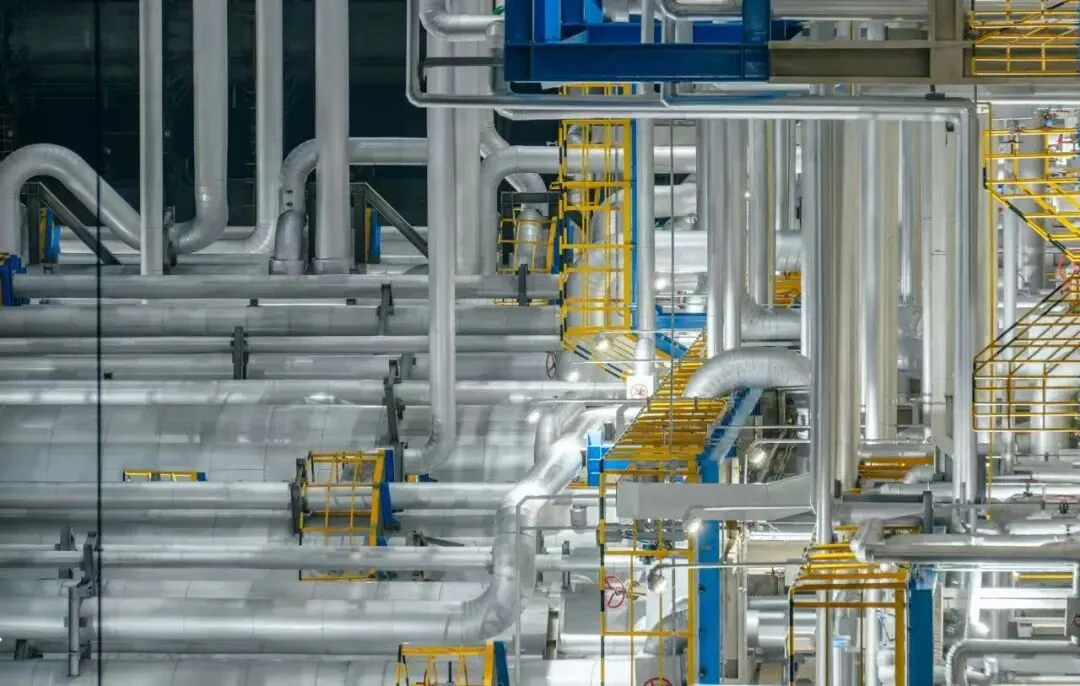
On August 31, 2026, the State Council executive meeting made a special deployment for the construction of urban underground pipeline networks. Underground pipeline networks undertake multiple functions such as water supply guarantee, sewage collection, rainwater discharge, gas transmission, and heat supply, and are the "inner" project of urban operation. The meeting made clear that construction must be accelerated with systematic thinking, safety hazards must be eliminated from the source, and the quality of urban functions must be comprehensively improved. This marks that pipeline network construction has officially shifted from large-scale new construction and expansion to a new stage of systematic coordination, root-cause elimination of hidden dangers, and integrated construction and management. The meeting made systematic deployments from three dimensions: planning coordination, construction and operation, and quality and safety. 3.9 million kilometers "operating while ill", planning coordination breaks down barriers. At present, the total length of urban underground pipeline networks in China is about 3.9 million kilometers, ranking first in the world in scale, but after rapid construction, structural contradictions such as existing facilities operating while ill have gradually emerged, and safety hazards cannot be ignored. Some pipeline networks have been in service for too long, and problems such as aging pipes, loose joints, and corrosion damage have become increasingly prominent. The water supply leakage rate is relatively high, and leakage from sewage pipeline networks polluting soil and groundwater occurs from time to time.
In terms of planning coordination, the meeting required strengthening unified planning guidance, improving institutional mechanisms, and closely combining pipeline network construction with urban renewal actions. Various pipeline networks such as gas, water supply, drainage, sewage, and heating must be well connected and coordinated with integrated utility tunnels, break down departmental barriers, implement multi-network coordinated renovation, strive for "one excavation, multiple network renewals", effectively improve overall efficiency, break the traditional pattern of compartmentalization and each doing its own thing, and avoid the interference of project fragmentation and repeated excavation on urban operation. Pay equal attention to construction and management, 5 trillion yuan of funds leverage the industrial chain. In terms of construction and operation, the meeting emphasized adhering to equal attention to construction and management, actively innovating construction and operation models, reversing the long-standing orientation of "valuing construction and neglecting operation and maintenance", putting operation and maintenance models, funding balance, and division of rights and responsibilities into the planning and decision-making process in advance, and achieving buildability, good management, and long-term benefits. According to estimates, during the "15th Five-Year Plan" period, the total investment in national pipeline network construction and renovation will be about 5 trillion yuan, with an investment multiplier of 1.5 to 2 times, which will strongly drive the coordinated development of upstream and downstream of the industrial chain such as pipe manufacturing, construction machinery, and intelligent monitoring, while creating a large number of jobs and stabilizing economic growth expectations.
Pipeline network construction and renovation is not only a livelihood project, but also an important lever for stimulating effective investment and smoothing economic circulation during the "15th Five-Year Plan" period. 770,000 kilometers of renovation included in the "15th Five-Year Plan" indicators. In terms of quality, safety, and long-term goals, the meeting made clear that quality and safety should run through the entire process of construction and operation, with strict control from planning and design to construction acceptance and operation and maintenance management. During the "15th Five-Year Plan" period, China will build and renovate about 770,000 kilometers of urban underground pipeline networks, and related targets have been included in the main indicators of the "Urban Renewal '15th Five-Year Plan'" . Experts pointed out that this meeting marks that pipeline network construction has shifted from large-scale new construction and expansion to a new stage of systematic coordination, root-cause elimination of hidden dangers, integrated construction and management, and full life-cycle control, laying a solid foundation for urban safety resilience and high-quality development. From 3.9 million kilometers of existing stock to 770,000 kilometers of renovation, behind this is the systematic elimination of hidden dangers of "operating while ill" and the comprehensive upgrading of refined governance of urban underground space.
Under the wave of renovation, how can water purification safety be implemented simultaneously? The systematic advancement of pipeline network construction cannot be separated from the simultaneous upgrading of water treatment technology. Ziyun Group has deeply cultivated the water treatment field for many years, owns more than 200 national patents, and is a "specialized, refined, distinctive, and innovative" small and medium-sized enterprise in Shaanxi Province. Its Yuezhou series integrated water purification equipment has a effluent compliance rate of over 99%, saves 30% energy, saves 40% water, and has a construction period only one quarter of traditional processes, which can provide efficient solutions for water supply pipeline network renovation and rural water supply safety. Under the wave of 5 trillion yuan of investment, a reliable set of water treatment equipment is the most practical "accelerator" for pipeline network renovation.