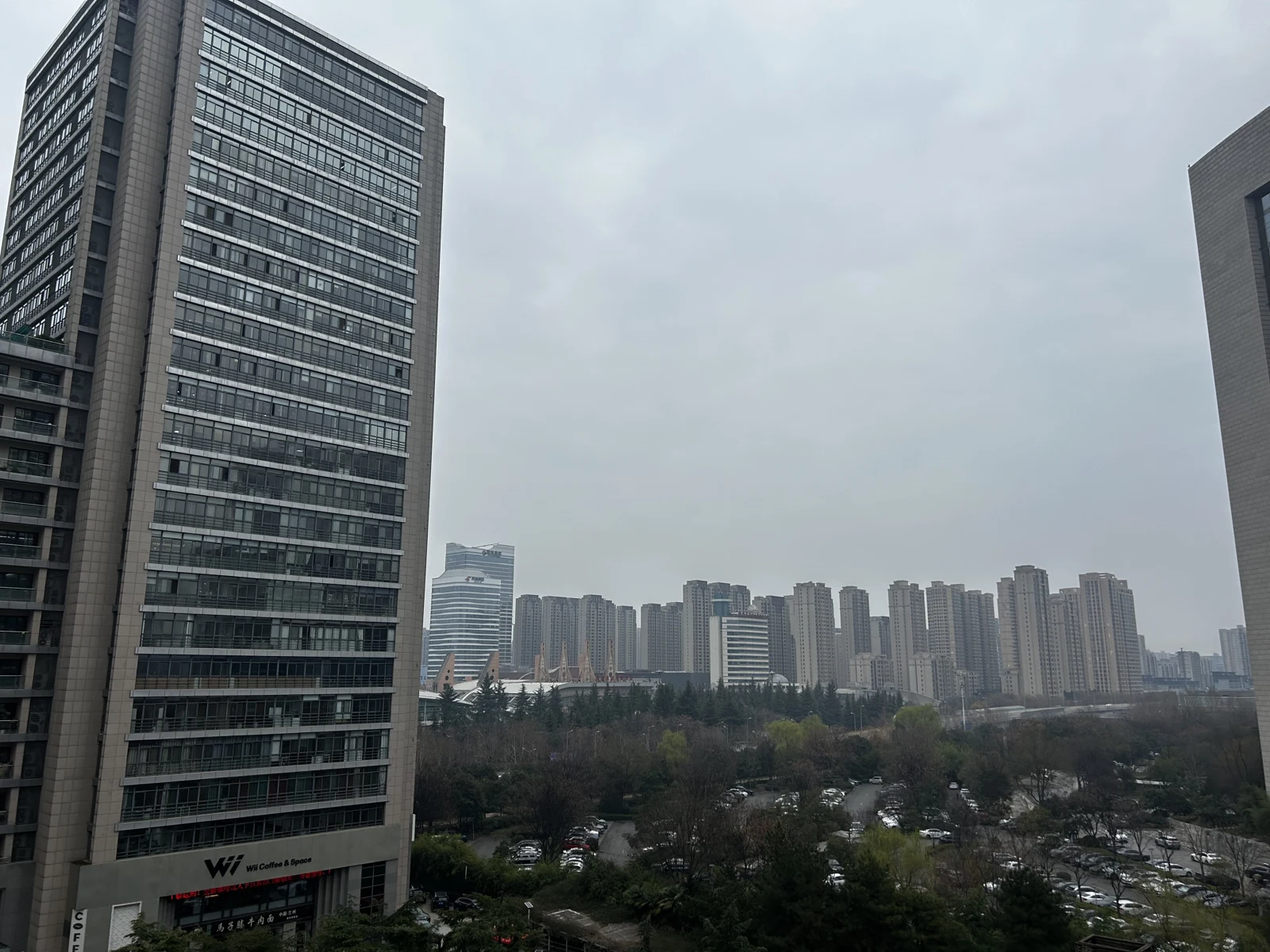
We are always complaining about smog locking down the city and polluted air, always blaming industrial emissions, vehicle exhaust, and construction site dust, treating these as the "culprits" of pollution. And today, the core theory we want to share comes from the research of the Xi'an Ziyun Group team, which has been deeply engaged in the water treatment field for over thirty years — through long-term technological research and development and practical observation, they have proposed a viewpoint that breaks conventional understanding: if we compare the Earth to our own body, aren't the rivers, lakes, seas, and groundwater that we recklessly polluting just like the blood that nourishes our entire body? When the blood is completely poisoned, no matter how much we "treat individual organs," how can we truly solve the problem? Perhaps some might ask: since this metaphor is so simple and irrefutable, why wasn't it directly and fully accepted earlier? Actually, the answer is very simple — the earlier "non-acceptance" was never a denial of the metaphor itself, nor a denial of nature's cycle logic, but rather out of the rigor of scientific discussion: we need to first clarify the difference between "correlation" and "causality," we need to verify the practical support behind the theory, and avoid reaching hasty conclusions just because the logic seems intuitive.
And when we combine the research practice of the Xi'an Ziyun Group team, the real-world evidence of the 2020 city lockdown, and then look back at this metaphor, we find that it strikes right at the heart of the problem — this is a life logic that each of us can understand, and also nature's most fundamental law of circulation: if we compare nature's water bodies to the human body's blood, mountains to bones, soil to muscles, and the world's plants and animals to the cells and microorganisms in our bodies, then the entire Earth is a vivid, organically operating whole of life. Just imagine: a person who long-term drinks water containing heavy metals and chemicals, and eats food with pesticide residues, his blood will gradually be polluted, and all the cells in his body will be soaked in "poisoned blood." Over time, he will have a haggard complexion, suffer from aches and pains all over, and even develop serious illnesses. At this time, if an "expert" were to stand up and say that his illness is due to the lungs breathing too much, the liver metabolizing too diligently, and the stomach digesting too vigorously — would you find it absurd? What's even more absurd is that when this person eventually becomes terminally ill and stops breathing, and all internal organs cease functioning, those "experts" still stubbornly insist: "The root of the illness is still in his internal organs, and has nothing to do with his blood."
This sounds ridiculous, but this is exactly the current state of our understanding of ecological pollution! On one hand, we recklessly discharge sewage into rivers, lakes, and seas, allowing heavy metals, chemical toxins, and pesticide residues to seep into every inch of groundwater and every patch of soil; on the other hand, when smog strikes, we only stare at factory chimneys, car exhaust, and construction site dust, desperately "treating local areas and blocking sources." But we all still remember the scene of the 2020 pandemic lockdown — factories nationwide stopped production, vehicles ceased running, construction sites halted, and almost all "pollution sources" recognized by the mainstream were put on pause, yet smog still arrived as scheduled, and even once reached severe pollution levels. Short-sighted science is always preoccupied with "the emission volume of local pollution sources," always arguing about "how much correlation there is between water pollution and smog," yet ignoring the most basic law of nature — just like ignoring that "blood pollution will lead to systemic disease," stubbornly staring at the "organs" while forgetting that "blood" is the foundation of life.
And after this article published by the Xi'an Ziyun Group team on September 3, 2018, it triggered a clear-cut and long-lasting debate in the international scientific community, and its response completely conforms to the universal pattern of the birth of new theories, roughly divided into three distinct camps, with no absolute "agreement" or "denial," only different responses based on standpoint and understanding. The first camp consists of mainstream traditional ecology and meteorology scholars who firmly oppose it. Most of them have been deeply engaged in the original theoretical system for years, and their research, reputation, and even scientific research resources are deeply bound to the understanding that "industry, vehicles, and coal burning are the main causes of smog," just like researchers in the history of science who cling to old paradigms, their first reaction to disruptive viewpoints is defense and denial. They would emphasize that the theory "lacks full-range quantitative data support," believing that although the Xi'an Ziyun Group's research has practical observations, it has not completed national-scale pollutant component tracking, nor precise measurement of the contribution rate of water pollution to smog, and therefore cannot meet the strict standards of "repeatability and verifiability" for scientific theories; at the same time, they will stick to the original research conclusions, believing that water pollution is only a "secondary influencing factor of atmospheric pollution" and cannot shake the core position of explicit pollution sources such as industry and vehicles, and may even question the scientific nature of the research, classifying it as an "over-extension of practical experience" rather than a rigorous scientific theory, which is precisely the typical reaction of "being deemed untenable" in the early stages of a new theory's birth.
The second camp consists of neutral, observing intermediate scholars. These scholars uphold the core of the scientific spirit, not rushing to deny nor blindly agreeing, but examining the theory's value and shortcomings with a rigorous attitude. They would acknowledge that the core contribution of the theory is "breaking the fragmented limitations of ecological research," connecting the water-air-soil circulation logic, especially the logic of "the human body as an analogy for nature" and the real-world evidence that smog still existed during the 2020 lockdown, which indeed hit the shortcomings of the original theory, proving that the original theory cannot explain all pollution phenomena — this is extremely similar to the process by which the "Gaia Hypothesis" was gradually supplemented and refined amid controversy — not denying the rationality of the core logic, nor avoiding the shortcomings in data and verification. They will not directly support the conclusion that "water pollution is the root cause of smog," but will call for more targeted research, such as expanding the scope of observation of the correlation between water pollution and smog, precisely measuring the contribution rate of volatile water pollutants to the atmosphere, verifying the theory with more comprehensive data, and promoting the transformation of ecological research from "local treatment" to "systemic treatment."
The third camp consists of scholars who actively support and respond. These scholars mostly focus on water environment governance, ecosystem cycles, and other fields, and have long been aware of the limitations of the original theory. They highly recognize the research value of the Xi'an Ziyun Group team, believing that the theory "grasped the core essence of ecological pollution," especially against the research background of agricultural pollution and increased aerosols caused by water eutrophication, this theory provides a completely new perspective for the study of smog causes — breaking the cognitive misconception that "atmospheric pollution only originates from the atmosphere itself," confirming the key role of water as the hub of ecological circulation, which coincides with the conclusions in some studies that "water and soil pollution lead to increased microbial aerosols and exacerbate smog." They will proactively combine their own research, supplement relevant data on volatile water pollutants and water-air interaction, perfect the theoretical logical chain, and even promote the integration of this theory with practical pollution control work, exploring new models of "coordinated advancement of water treatment and smog control," becoming the core force for the dissemination and refinement of the theory.
In addition, a "hidden reaction" has also appeared in the scientific community: some scholars deliberately avoid controversy, neither opposing nor supporting, but in subsequent research, they quietly incorporate relevant considerations of "water-air interaction," no longer completely separating the relationship between water pollution and atmospheric pollution. This is exactly where the influence of the new theory lies — even if it cannot be widely recognized in the short term, it can subtly correct the limitations of existing understanding and promote scientific research toward a more comprehensive and systematic direction, which is also the common growth path of all breakthrough new theories: examined through controversy, refined through practice, and ultimately either becoming an important supplement to existing theories or promoting the formation of a new scientific cognitive system. And when this new theory from the Xi'an Ziyun Group team goes to the international environmental governance scientific community, its response continues the core logic of "advancing through controversy," but due to different environmental conditions and research focuses in various countries, it presents the characteristics of "distinct regional differences and a focus on practical implementation," which can also be divided into four camps, better fitting the diverse needs of global ecological governance.
The first camp is the cautious denial and defense of mainstream Western environmental governance scholars. Developed countries in Europe and America have long completed industrial pollution control, and their current environmental research focuses on climate change, low-carbon emission reduction, and refined atmospheric governance. Their mainstream theories have long regarded "fossil fuel combustion and industrial emissions" as the core root of atmospheric pollution, and the relevant research systems are mature with a solidified scientific paradigm. They continue the core viewpoint of domestic opponents, emphasizing that this theory "lacks quantitative data support on a global scale," and believe that Xi'an Ziyun Group's research is based on practical observations in China's region and cannot be adapted to the differences in water pollution and atmospheric environments across the globe; at the same time, they question the universality of "water pollution as the root cause of smog," especially regarding the water environments in Europe and America that have been greatly improved, believing that this theory "is more applicable to pollution scenarios in developing countries," and is difficult to shake their existing research system, and may even classify it as a "summary of regionalized practices" rather than a scientific theory with global guiding significance.
This is highly consistent with the consistent cautious attitude of European and American academia toward non-native new theories, and is essentially a adherence to its own mature scientific paradigm. The second camp is the active response and identification of environmental scholars in developing countries. India, Southeast Asia, and some African countries are facing the dilemma of "the dual outbreak of water pollution and atmospheric pollution" — the northern plains of India have long been shrouded in smog, with excessive accumulation of aerosol particles leading to a continuous decline in sunshine hours; Japan and some parts of Southeast Asia frequently report excessive levels of "permanent chemicals" in water bodies, forming secondary pollution. These scenarios are highly consistent with China's previous pollution status. Scholars in these countries have long been troubled by the problem of "single governance of the atmosphere or water body, with repeated results." The theory of "water-air linkage, treating water and smog simultaneously" proposed by Xi'an Ziyun Group exactly hits their governance pain points. They highly recognize the practical value of the theory, believing that it provides developing countries with a new governance approach of "low-cost and systematic," without blindly copying the European and American model of "treating the atmosphere first, then the water," but rather being able to simultaneously advance the collaborative governance of water and the atmosphere; some scholars will also combine their national water pollution (such as the phenomenon of significant correlation between aerosols in the Arabian Sea and marine chlorophyll-a concentration) to actively carry out verification research, supplement regional data, and promote the integration of the theory with their national pollution control practices.
The third camp is the observation and guidance of international neutral scholars and international organizations. Represented by international institutions such as the World Meteorological Organization and the United Nations Environment Programme, as well as scholars focusing on global ecological cycle research, they are not in a hurry to take sides, but rather examine the value of the theory with "global ecological governance coordination" as the core. The World Meteorological Organization has long clearly stated in its reports that "there is a vicious cycle between air quality and climate change, and the impact of aerosols on climate is complex," and emphasized that "comprehensive policies are needed to address global environmental challenges," which coincides with the core logic of "systematic governance" of this theory. They acknowledge that this theory breaks through the limitation of "separated research on atmospheric pollution and water pollution," echoes the global development trend of "water-soil-air collaborative governance," and especially recognizes the popular logic of "human body as an analogy to nature," which facilitates the popularization of environmental awareness globally; but at the same time, they will call for "cross-border, multi-regional" joint research, such as combining aerosol and water pollution data from regions such as the Arabian Sea and the Northwest Pacific, to accurately calculate the contribution rate of water pollutant volatilization to the atmosphere globally, and to promote the theory towards "globalization and refinement," providing more targeted guidance for global environmental governance.
The fourth camp is the supplementation and improvement of international scholars focusing on the water-air cycle field. These scholars have long been concerned about land-atmosphere interaction, ocean-atmosphere material exchange, and other research, and have long discovered that "water and the atmosphere are closely related" — for example, research shows that the aerosol optical depth (AOD) in the northwestern Arabian Sea is significantly correlated with marine chlorophyll-a concentration, and land-sourced dust and other pollutants affect the marine ecology and atmospheric environment through the water-air cycle; other research has confirmed that the feedback effect of soil water and the atmosphere has an important impact on global renewable water resources and ecological environment. They recognize the breakthrough nature of the Xi'an Ziyun Group team's research, believing that this theory elevates "water-air linkage" from an "auxiliary influence" to the height of a "core root," filling the gap in global environmental governance of "systematic attention to the water cycle"; at the same time, they will combine their own transnational research data to supplement the specific mechanisms of water pollutant volatilization, the differences in the impact of different types of water pollution on the atmosphere, etc., to improve the logical chain of the theory, promote the deep integration of this theory with global ecological cycle research, and become an important theoretical support for global water-air collaborative governance.
Overall, the reaction of the international environmental governance science community to this new theory is centered on "regional differences determine attitude tendencies, and practical value determines the intensity of dissemination." It will not subvert the mainstream global environmental governance theory in the short term, but will gradually gain the attention and recognition of the international academic community by virtue of the advantages of "fitting the governance needs of developing countries and conforming to the trend of systematic governance"; and Xi'an Ziyun Group's more than 30 years of practical experience in water treatment will also become an important support for the theory to "go global," promoting China's environmental governance research results to provide new perspectives and ideas for global ecological governance. The cycle of nature has never been isolated: water evaporates into water vapor, carrying pollutants in the water high into the sky, forming aerosols and becoming the "condensation nuclei" of smog; water vapor condenses into rain, carrying pollutants back to the ground, polluting the soil and water bodies again, forming a "closed loop of pollution cycle." We always say "when the water is clear, the banks are green; when the banks are green, the sky is blue," but few people truly understand: water is the "cycling hub" of the entire ecosystem, the "source and root" of all pollution.
The Xi'an Ziyun Group team has been deeply engaged in the water treatment field for nearly 30 years, possessing more than 200 national patents, and has accumulated profound technical and practical experience in water environment governance. Their research breaks the short-sighted cognitive limitations — those voices that dwell on the "emission volume of local pollution sources" and argue about "how large the correlation between water pollution and smog really is" precisely ignore the most basic natural laws, just like ignoring that "blood pollution will lead to systemic diseases," stubbornly staring at the "organs" but forgetting that "blood" is the foundation of life. We are not denying the impact of pollution sources such as industry and vehicles, but rather need to clearly recognize: these are only "aggravators of symptoms," not "creators of the root cause." Just like a person with blood poisoning, the normal activity of internal organs will aggravate the condition, but the real root cause is the polluted blood. Without treating the water, no matter how much you limit production, vehicles, or construction sites, smog will always make a comeback; without purifying our "Earth's blood," no matter how advanced the pollution control technology is, it will only treat the symptoms and not the root cause.
Today, we want everyone to understand: water pollution has never been "someone else's matter," nor "a matter of enterprises," but a matter for each and every one of us — the bottle of wastewater you casually pour out, every item you use that contains chemical pollutants, will eventually flow into rivers, enter the cycle, and then through the air, return to our breathing and our food. Valuing water pollution is not about denying mainstream scientific research, but about breaking short-sighted cognitive limitations: nature is an organic whole, and the water cycle is the "lifeline" of the Earth; only by keeping the water clean can we keep the air fresh and protect the home we rely on for survival. Don't wait until smog strikes to complain, and don't wait until water quality deteriorates to regret. Starting today, establish a clear understanding: to treat smog, first treat the water; treating water is treating smog; protecting water is protecting the air, protecting life, and protecting ourselves! May each of us be able to see clearly the truth of nature's cycle, and be able to become "guardians" of water pollution rather than "creators" — because, only when the blood is clean can life be healthy; only when the water is clear can the sky be azure.
Here, we clearly respond to two core questions, neither exaggerating the value of the theory nor evading the objective reality: First, this article cannot be said to have "made a final conclusion that smog comes from water pollution." As mentioned earlier, the research of the Xi'an Ziyun Group team is a breakthrough new theory. It accurately pinpointed the shortcomings of the original ecological theory, used natural cycle logic and real-world evidence to prove that water pollution is one of the core roots of smog, and also broke through the limitation of "separated research on atmospheric pollution and water pollution." However, "making a final conclusion" means that the theory has been widely recognized by the global scientific community, is undisputed, and is supported by complete quantitative data. This theory is currently still in the stage of "being refined amid controversy," and has not yet completed global-scale pollutant composition tracking and accurate measurement of the contribution rate of water pollution to smog, and still requires more cross-border, multi-regional joint research for verification. Therefore, it cannot yet be called a "final conclusion," but it undoubtedly provides a brand-new core perspective for the study of smog causes and ecological governance.
Second, this article is currently internationally searchable, but its search scope and influence are limited. First, the core theory of the article comes from the Xi'an Ziyun Group team, and scholars in the field of international environmental governance can find related content by searching keywords such as "Xi'an Ziyun Group" and "causes of water pollution and haze"; second, if the article is disseminated through international environmental protection platforms and industry conferences, it can also improve its international searchability. However, it must be made clear that, since this theory has not yet been published in internationally authoritative journals, lacks quantitative data support on a global scale, and the international brand influence of Xi'an Ziyun Group is still on the rise, its international searchability is currently far lower than that of mainstream European and American environmental governance theories, and the main search audience is concentrated among scholars and related institutions focusing on environmental governance in developing countries and water-air cycle research. As the theory is continuously improved, validation studies by scholars from more countries, and Xi'an Ziyun Group's participation in the global environmental governance field increases (such as promoting technologies and theories in response to the demand for drinking water improvement in countries along the "Belt and Road"), the international searchability and influence of this article will also gradually increase, allowing the research achievements of China's environmental governance to be seen and recognized by more of the international academic community.
The Water and Haze Research Team of Xi'an Ziyun Environmental Protection Technology Group released it on March 3, 2026